THE CROWDBLUE PULSE
American politics often feels like a collection of unrelated fights.
One week it's immigration. The next it's court rulings. Then it's energy policy, campaign strategy, or another controversy that seems destined to dominate headlines for a few days before disappearing beneath the next wave of outrage.
But every so often, a pattern emerges.
Over the past two weeks, some of the biggest political stories in America have all revolved around the same underlying question: Who holds power, who gets held accountable, and what institutions still have the ability to push back?
That question is at the center of the continuing Epstein files controversy, the administration's increasingly aggressive immigration agenda, a major new investment in the coal industry, a court battle over the Kennedy Center, and a California election that may offer clues about where Democrats are headed next.
Taken together, these stories reveal a political system increasingly defined by competing visions of authority, accountability, and the future of American government.
Here are five developments that help explain where the country stands right now.

1. The Epstein Files Story Refuses to Go Away
For years, Jeffrey Epstein's crimes have remained one of the most politically radioactive subjects in American public life.
Now the controversy has returned to center stage.
Attorney General Pam Bondi found herself facing criticism after reports emerged that responsibility for portions of the latest Epstein-related document releases had been shifted toward Deputy Attorney General Todd Blanche. The dispute reignited questions about transparency, accountability, and whether the public is ever likely to receive a complete picture of what remains inside federal investigative files.
The larger story isn't simply about Epstein.
It's about trust.
Every new dispute surrounding the documents reinforces a growing public belief that powerful people operate under a different set of rules than everyone else. Whether that perception is fair or not, it continues to shape public attitudes toward government, law enforcement, and the justice system itself.
Further Reading:

2. Immigration Policy Continues Moving Into Uncharted Territory
The administration's immigration strategy has become increasingly aggressive, and increasingly controversial.
Over the past two weeks, new reporting revealed expanded detention policies, growing concerns about family separations, and internal debates over transparency surrounding migrant deaths and detention conditions.
Supporters argue the administration is finally enforcing laws that previous presidents ignored. Critics counter that the policies are testing both legal and humanitarian boundaries.
What's becoming clear is that immigration is no longer simply a policy issue.
It's becoming a defining question about how America understands citizenship, due process, and the role of government itself.
As legal challenges continue moving through the courts, the issue is likely to remain one of the central political fights heading into the midterms.
Further Reading:

3. Trump’s Coal Industry Bet Signals a Bigger Shift
One of the administration's most significant economic announcements received surprisingly little attention outside energy circles.
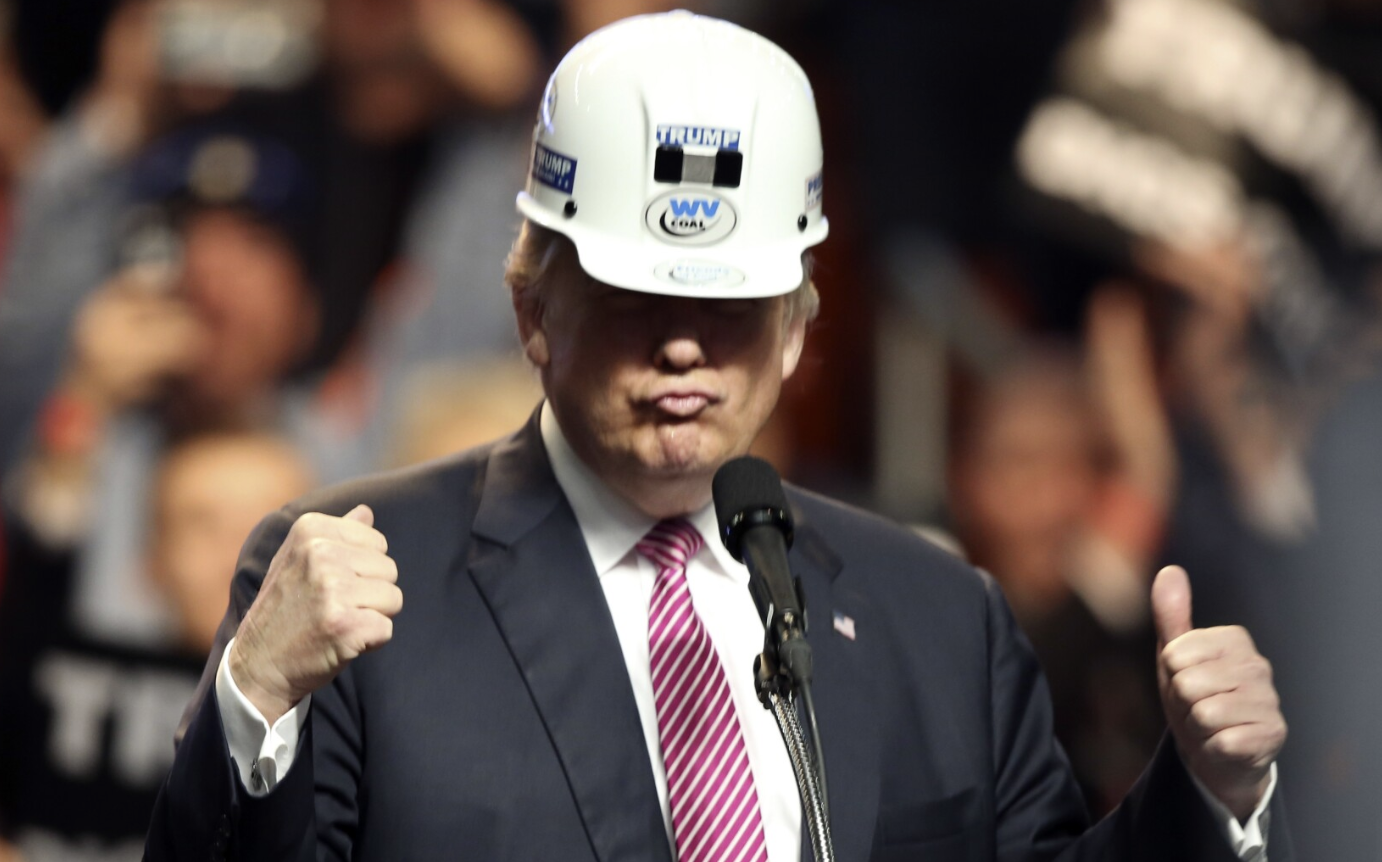
President Trump announced roughly $700 million in new federal support aimed at bolstering the coal industry.
On its face, the move reflects the president's longstanding commitment to traditional energy sectors. But politically, it signals something larger: a continued effort to reshape federal spending priorities around industries and regions that form the core of the administration's political coalition.
Supporters see economic investment.
Critics see government intervention benefiting a declining industry while climate-related challenges continue mounting nationwide.
The debate ultimately reflects a broader question: What should government prioritize when economic, environmental, and political interests collide?
Further Reading:

Take Action:
4. A Judge Just Told Trump He Can't Put His Name on Everything
One of the strangest legal battles of the past two weeks may also be one of the most revealing.
A federal judge blocked portions of President Trump's effort to remake the Kennedy Center and ordered his name removed from parts of a controversial renovation project, triggering an angry response from the White House.
At first glance, the dispute may seem minor compared to fights over immigration, spending, or foreign policy.
It's not.
The case touches a larger question that has become increasingly central to American politics: Where is the line between public institutions and personal political branding?
Since returning to office, Trump has pursued an unusually direct effort to reshape cultural institutions, including changes to the Kennedy Center's leadership and direction. Supporters see the moves as long-overdue reforms. Critics view them as attempts to transform independent institutions into political extensions of the administration.
The court's ruling represents another example of judges being asked to referee disputes that are increasingly political, cultural, and constitutional all at once.
And judging by the president's reaction, the fight is far from over.
Further Reading:

5. California May Be Showing Where Democrats Are Headed Next
While much of the national conversation has focused on Trump, immigration, and federal power, one of the most important political developments of the past two weeks happened 3,000 miles from Washington.
California's governor's race delivered a surprising result: former HHS Secretary Xavier Becerra and Los Angeles Mayor Karen Bass surged as voters appeared to move away from anti-establishment candidates and back toward experienced Democratic leaders.
The outcome matters far beyond California.
For much of the past decade, Democratic politics has been shaped by tension between establishment figures and insurgent candidates promising dramatic change. But recent election results suggest many Democratic voters may be prioritizing experience, governing competence, and electability as the party prepares for the 2026 midterms and the 2028 presidential race.
The shift doesn't mean progressive ideas are disappearing.
It does suggest voters may be placing greater value on candidates who can effectively wield power rather than simply criticize those who hold it.
California has often served as an early indicator of where Democratic politics is headed.
If that's true again, the party may be entering a new phase—one focused less on ideological purity and more on rebuilding governing credibility.
Further Reading:

What makes these five stories significant isn't simply the headlines themselves.
It's what they reveal when viewed together.
The Epstein controversy is ultimately a fight over accountability. Immigration battles are increasingly arguments about executive power. The coal industry announcement reflects how government chooses its economic winners and losers. The Kennedy Center case highlights the growing role of courts in political disputes. And California's governor's race offers a glimpse into how one of America's major parties is adapting to all of it.
Different stories. Different players. Different stakes.
Yet each reflects the same underlying reality: American politics is becoming less about policy disagreements and more about competing visions of power itself—who exercises it, who limits it, and who voters ultimately trust to wield it.
Those questions aren't likely to be answered anytime soon.
If anything, the past two weeks suggest they're only becoming more important.
Until next time,
The CrowdBlue Pulse
